A foodie's quest to turn up the heat through strength and conditioning with whole food and a hungry mind.

Showing posts with label rice. Show all posts

Friday, January 27, 2012

Healthy Product Review: Rice Select Jasmati Rice

Did you know rice is the most commonly consumed grain in the world? It should come as no surprise since it is widely available, affordable, and nutritious.

There’s a long list of health benefits provided by this amazing grain such as:

- Great Energy Source: Rich in carbohydrates, it acts as fuel for the body and aids in normal functioning of the brain.

- Rich in Vitamins: Rice is an excellent source of vitamins and minerals like niacin, vitamin D, calcium, fibre, iron, thiamine and riboflavin.

- Resistant Starch: Rice abounds in resistant starch, which reaches the bowel in undigested form. It aids the growth of useful bacteria for normal bowel movements.

- Dysentery: The husk part of rice is considered as an effective medicine to treat dysentery. A three month old rice plant’s husks is said to contain diuretic properties. Chinese people believe that rice considerably increases appetite, cures stomach ailments and indigestion problems.

- Skin Care: Medical experts say that powdered rice can be applied to cure some forms of skin ailments. In Indian subcontinent, rice water is duly prescribed by ayurvedic practitioners as an effective ointment to cool off inflamed skin surfaces.

Obviously, with its popularity and long list of nutritional benefits, I jumped at the chance to sample Jasmati rice from RiceSelect. Jasmati can be found in white, brown, or light brown varieties; I was sent a large container of white rice to cook and sample as I pleased. It didn’t take me long to decide how I would use most of the sample…..rice pudding! Something about the cool, creamy pudding that’s easy on the stomach and tasty at the same time ranks it as one of my top 5 favorite treats. It also helps that RiceSelect is local company here in Texas which automatically gains my full support.

Although I would always choose brown rice when given a choice, white rice works really well for rice pudding. Being the health-obsessed person I am, I had to try making this in my own healthy way without the heavy dairy products and cups of sugar. Here is what I came up with…..


Ingredients:

2 1/2 cups nonfat milk
1/2 cup RiceSelect Jasmati rice , uncooked
1 15oz can light coconut milk
1 cinnamon stick, about 3 inches long
1 ½ teaspoon liquid Stevia
1/2 teaspoon vanilla extract
ground cinnamon
unsweetened shredded coconut flakes

Directions:

In a large, heavy bottomed saucepan, stir together the 2 1/2 cups milk and the rice. Bring to a boil over high heat, stirring often. Reduce heat to medium high and boil for 5-6 minutes or until the mixture begins to thicken, stirring often to keep anything from sticking to the bottom. Stir in the can of coconut milk, the cinnamon stick, and stevia. Increase the heat to high and bring back to a boil, stirring often. Reduce heat to medium high and boil for 4-5 minutes or until you have a creamy and soupy consistency. Remove from heat. Stir in vanilla and let the mixture stand for 30 minutes to thicken. Serves 6 generous helpings.
I enjoy most treats with a cup and spoon.

Before serving, remove the cinnamon stick. To enjoy immediately, put rice in a serving dish, sprinkle with cinnamon to taste and enjoy. If you’re like me and want cold pudding, transfer your creation to an airtight container, lay a sheet of plastic wrap on the top, and chill for several hours. The plastic will prevent skin from forming and keep your dish looking great.

I am very happy with the outcome of this pudding, and think it is proof to have a healthy, guilt-free treat to be enjoyed everyday! I suggest you pickup some RiceSelect rice (any type is great) and start cooking today.  Try this recipe with Texmati® Brown Rice for an extra health punch that is sure to please any crowd.

Do you like rice dishes as something sweet, savory, or both? What will you make with this versatile product when you get it?

Wednesday, April 13, 2011

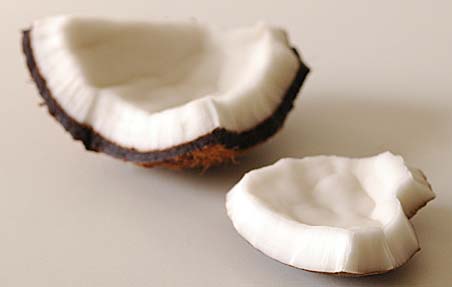
Crack a Coconut for Health


Coconut seems to be on the “bad for you” list in some people’s mind, but this belief is false. It doesn’t help when the general public is exposed to confusing media “research” making claims for and against foods. Let’s just throw out the idea that coconut is bad right now! It may seem daunting in its hard, spherical outer shell, but the sweet flesh and water is a real treat on the inside.
“But isn’t coconut high in saturated fat,” you ask? Well, yes, kind of, but its saturated fat is in the form of a medium-chain fatty acid (mcfa) called lauric acid. Lauric acid acts as a natural anti-viral, microbial, and fungal compound when consumed. This mcfa makes up 50 percent of coconut oil and provides a great, natural way to fight any impending bacterial or viral agents. If you’re still not convinced coconut’s fat content is healthy, consider the fact that the only other natural source for lauric acid is in breast milk which contains all nutrients needed to feed an infant.
Combine it with cinnamon, cardamom, ginger, cloves, garlic cumin, coriander, and turmeric for a flavorsome way to promote healthy digestion and boost metabolism. As a way to increase the size of (fatten) their cattle, farmers tried feeding them coconut oil back in the 1940’s. But, instead of gaining weight, the cattle became more active with an increased appetite and a leaner body composition.


Consequently, this effect has been found to have the same reaction in humans. Coconut oil’s mcfa's increase the metabolism through thermogenesis (calories burned from digesting food), which helps both animals and humans lose fat and keep it off. Unlike some vegetable oils, coconut oil is stable at high heat and can resist any damage to its beneficial components. Keep in mind that any “health” benefits from other oils are wiped out and they actually become toxic when exposed to high heat.  Stick to using extra virgin olive oil on salads and other non-heated dishes to obtain its benefits.


So, how should you start using coconut? Well, depends on what form you get it. You can find whole coconut (some stores sell it already shelled and cleaned), coconut oil, water, milk, flakes, flour, butter, and cream. The water does not contain the fat like the other varieties, but offers many benefits itself. Coconut water is low in sugar in its natural form, still contains some lauric acic, a great hangover preventer, naturally sterile, and one of the best fluid replacers.


Try using extra-virgin coconut oil in place of olive and vegetable oils for cooking or baking recipes. Add canned coconut milk (not the SO Delicious stuff in a carton) to your favorite smoothies or in mixed with sweet potatoes simmered in a sauce pan. Kelley and I love eating coconut rice alone or with tuna, beans or chicken.

Here’s an easy coconut rice recipe found at http://allrecipes.com/Recipe/Coconut-Rice/Detail.aspx

Ingredients

1-1/3 cups and 2 tablespoons Basmati rice
2-1/4 (10 ounce) cans coconut milk
5/8 pinch salt

Directions

This recipe's Ingredients were scaled to yield a new amount. The directions below still refer to the original recipe yield of 6 to 8 servings.

1. In a large saucepan over high heat, combine rice, coconut milk and salt; bring to a boil.

2. Reduce heat, cover and simmer for 20 to 25 minutes, or until liquid is absorbed and rice is tender.


Try buying a whole coconut and using one of these methods to get inside to the flesh and water.


I found it easier and more enjoyable than expected by using method #1. Once open, I decided to make coconut milk following the instructions presented on http://www.marksdailyapple.com/coconut/.

This was really delicious and created a sense of accomplishment (and victory!) for having opened and processed my own coconut. Make sure to save a few small chunks to experience the flavorful flesh.
Coconut on FoodistaCoconut
Whether whole or in one of its many prepared forms, I hope you enjoy adding coconut to your diet. Remember, there can be too much of a good thing, so don’t go eating coconut oil by the spoonful. Just try mixing things up and using in place of other ingredients to derive the benefits offered from all whole foods.